
What Happens to Excess Solar Electricity Generated During the Day?
Your solar panels may generate more electricity than your home needs during sunny hours. But where does that extra electricity go? Understand how excess solar power is exported to the electricity grid, how net metering works, and how homeowners can benefit from their rooftop solar systems.
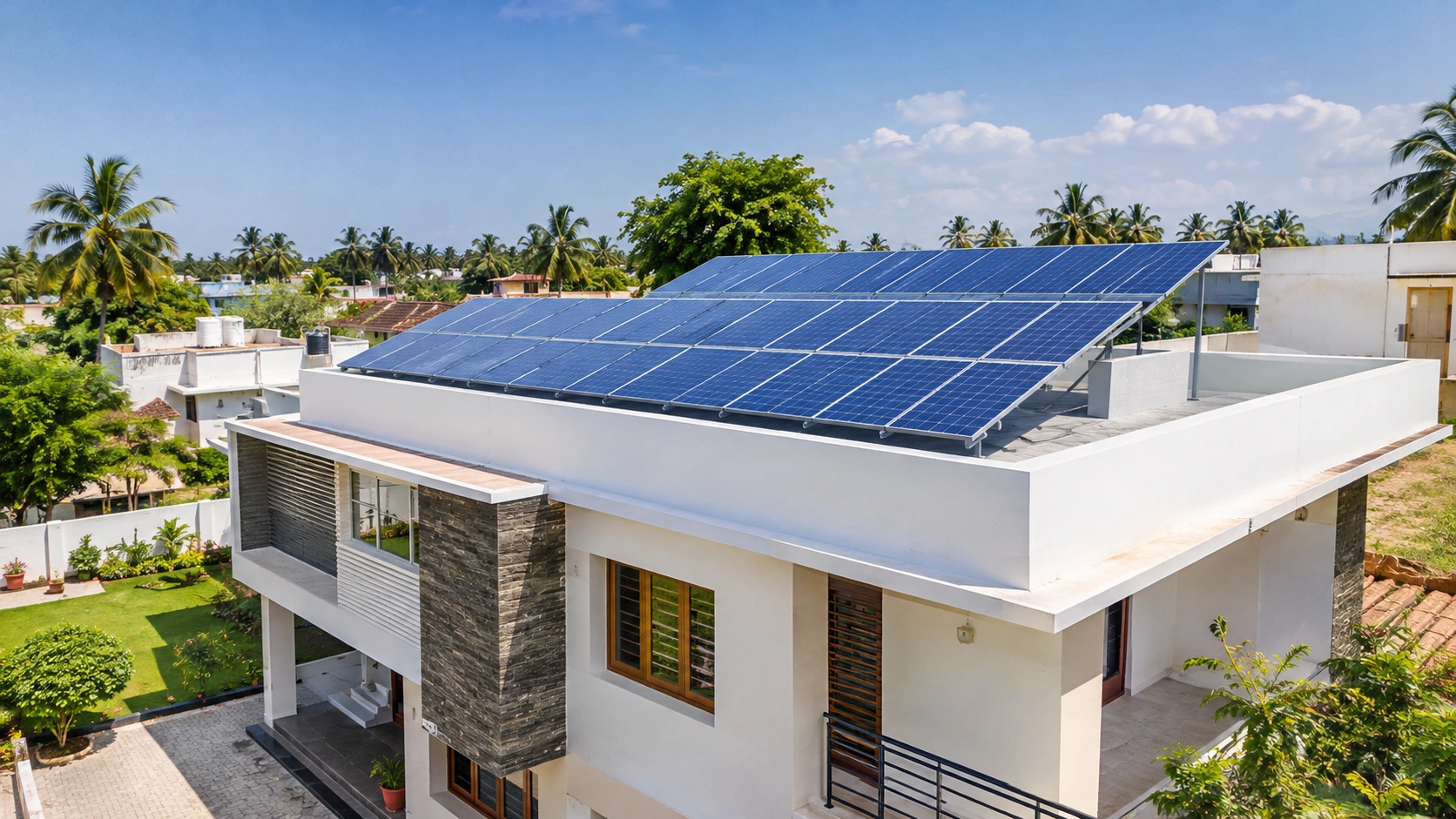
Imagine it's 12 noon. The sun is shining brightly, and your rooftop solar panels are generating plenty of electricity. But your family is using only a few appliances at that moment. Your air conditioner is switched off, the washing machine isn't running, and most of the electricity generated by your solar panels isn't needed immediately.
So, what happens to all that extra electricity? Does it go to waste? Is it stored somewhere automatically? Or does it get sent back to the electricity grid?
The answer depends on the type of solar system installed at your property. In a typical on-grid rooftop solar installation with an approved net-metering arrangement, excess electricity can be exported to the electricity grid. This allows homeowners to make better use of the electricity their solar panels generate.
1. Why Do Solar Panels Generate More Electricity Than Your Home Needs?
Solar panels generate electricity whenever sufficient sunlight is available. Their generation is usually higher around the middle of the day, when sunlight is stronger.
However, household electricity consumption doesn't always follow the same pattern. Many families use more electricity in the morning and evening, while daytime consumption may be relatively low, especially when everyone is away at work or school.
This difference between solar generation and household consumption creates surplus electricity.
- Solar panels generate electricity during sunny daytime hours.
- Household appliances consume electricity according to your daily usage.
- When solar generation exceeds consumption, extra electricity becomes available.
- Depending on your system configuration, this electricity may be exported to the grid, stored in a battery, or curtailed.
2. Where Does Excess Solar Electricity Go?
In an on-grid solar system, the inverter manages the electricity generated by your panels. The electricity is first used by appliances operating in your home. If your solar system generates more electricity than your home needs, the surplus can flow through the grid-connected meter and into the electricity network.
This process is commonly called exporting electricity to the grid. The exported electricity becomes part of the wider electricity network, where it can be used by other consumers connected to the grid.
For example, if your solar panels generate 5 units of electricity while your home consumes only 2 units, approximately 3 units may be exported to the grid, assuming the system is operating normally and the grid allows the export.
A Simple Example
| Electricity Details | Units |
|---|---|
| Solar electricity generated | 5 units |
| Electricity used by your home | 2 units |
| Excess electricity exported | 3 units |
In this example, your home uses 2 units directly from solar energy, while the remaining 3 units are sent to the grid. The exported electricity may be accounted for through your approved metering arrangement.
3. What Is Net Metering and How Does It Work?
Net metering is a billing arrangement that records the electricity your solar system imports from and exports to the electricity grid. It helps calculate the net electricity consumption of your property over the applicable billing period.
Unlike a conventional electricity meter that mainly records electricity consumed from the grid, a bidirectional meter can measure electricity flowing in both directions.
How Net Metering Works Step by Step
- Your solar panels generate electricity during daylight hours.
- Your home appliances use the electricity they need from the solar system.
- Any surplus electricity is exported to the grid when permitted.
- When solar generation is insufficient, your home imports electricity from the grid.
- The meter records the imported and exported electricity.
- Your electricity account is calculated according to the applicable net-metering rules and billing arrangement.
Example of a Monthly Net Metering Calculation
Let's understand this with a simple example. Suppose your home imports 250 units of electricity from the grid during a billing period, while your solar system exports 180 units.
| Electricity Details | Units |
|---|---|
| Grid electricity imported | 250 units |
| Solar electricity exported | 180 units |
| Net energy difference | 70 units |
In a simple net-metering arrangement, the difference would be 70 units. However, your final electricity bill may also include fixed charges, applicable taxes, other fees, and adjustments under the relevant electricity regulations.
Actual billing treatment depends on the consumer category, applicable regulations, meter configuration and the approved arrangement with the electricity distribution company.
4. What Happens to Solar Electricity at Night?
Solar panels need sunlight to generate electricity. Once the sun sets, your rooftop solar system stops producing meaningful electricity.
But your household still needs electricity for lights, fans, televisions, refrigerators and other appliances.
If you have a conventional on-grid solar system, your home can draw electricity from the utility grid whenever your solar panels are not generating enough power. The electricity exported during the day may be accounted for through your net-metering arrangement, depending on the applicable billing rules.
This is one reason why on-grid solar systems can be useful for households that generate surplus electricity during the day but consume more electricity in the evening.
5. What If You Don't Have Net Metering?
Not every solar installation has the same export arrangement. Whether surplus electricity can be exported and how it is treated depend on the system configuration and the approvals provided by the electricity distribution company.
Without an approved export arrangement, you should not assume that excess electricity will automatically earn credits or reduce your electricity bill.
Depending on the inverter and system configuration, surplus generation may be limited or curtailed to prevent electricity from flowing into the grid.
If you are planning a rooftop solar installation, discuss grid connectivity, export permissions and the applicable metering arrangement with your installer before proceeding.
6. Can You Store Excess Solar Electricity in a Battery?
Yes. A compatible solar battery storage system can store surplus solar electricity generated during the day and make it available later, such as during the evening or a power outage.
Instead of exporting all surplus electricity to the grid, a properly configured hybrid solar system can direct available excess generation towards charging its battery.
- Solar panels generate electricity during the day.
- Your home uses the electricity it needs.
- Available surplus electricity charges the battery.
- Stored energy can be used later when solar generation is low.
- A compatible backup configuration can supply selected appliances during a grid outage.
However, batteries come with additional costs, conversion losses, capacity limitations and maintenance or replacement considerations. The right choice depends on your electricity usage, backup requirements and budget.
7. On-Grid vs Hybrid Solar: What Happens to Excess Electricity?
Both on-grid and hybrid solar systems can use solar electricity to power your home. However, they handle surplus electricity differently depending on their configuration.
| Feature | On-Grid Solar | Hybrid Solar |
|---|---|---|
| Uses solar electricity directly | Yes | Yes |
| Can export excess electricity | Yes, with an approved arrangement | Yes, when configured and approved |
| Battery storage | Usually not included | Can include battery storage |
| Can store surplus solar energy | Not without additional compatible storage | Yes, with a suitable battery |
| Backup during power cuts | Normally no | Possible with suitable backup configuration |
| Initial investment | Generally lower | Generally higher |
An important point to remember: a standard grid-connected on-grid inverter normally shuts down during a power cut to protect utility workers and prevent electricity from being fed into an isolated grid. A hybrid system also needs suitable backup functionality, battery storage and electrical configuration to provide power during an outage.
8. How Can Homeowners Make Better Use of Excess Solar Electricity?
Exporting surplus electricity can be useful, but homeowners can also improve the direct use of solar energy by adjusting when certain appliances operate.
Run High-Power Appliances During Daytime
If possible, operate appliances such as washing machines, water pumps and dishwashers during periods of good solar generation. This allows more of the electricity generated by your panels to be consumed directly at home.
Use Air Conditioning Efficiently
If your household uses air conditioning during the day, some of that electricity demand can be met directly by your solar system. Efficient temperature settings and regular servicing can also help manage consumption.
Consider Battery Storage if You Need Backup
If your household consumes significantly more electricity at night or experiences frequent power cuts, a battery-based system may be worth evaluating. Compare the battery investment with the actual backup requirement before choosing one.
Monitor Your Solar Generation
Many modern solar inverters provide mobile applications or monitoring dashboards. These tools help you understand how much electricity your system generates and identify changes in its performance.
9. Is Excess Solar Electricity Wasted?
Not necessarily. Excess solar electricity can be exported to the grid under an approved arrangement, stored in a compatible battery or used by additional appliances in your home.
However, if your system cannot export electricity and has no battery storage, the inverter may need to limit generation when your home cannot consume the available solar power.
This is why choosing the right solar system configuration is important. Your installation should be planned around your electricity consumption, roof conditions, grid connection and future requirements.
10. Is Net Metering Available for Rooftop Solar in Tamil Nadu?
Residential rooftop solar consumers in Tamil Nadu may be eligible for grid-connected solar arrangements under the applicable electricity regulations and distribution company procedures. Net-metering eligibility, technical requirements, system capacity limits and settlement rules should be checked before installation.
The process generally involves checking the property's electrical connection, submitting the required application, obtaining technical approval, installing an eligible solar system and completing the required inspection and meter-related procedures.
Since electricity regulations and application procedures can change, homeowners should confirm the latest requirements with Tamil Nadu's electricity distribution company before making an investment.
Frequently Asked Questions (FAQ)
1. 1. What happens to extra electricity generated by solar panels?
In an approved grid-connected solar installation, excess electricity can be exported to the utility grid. Depending on the metering arrangement, it may be accounted for in your electricity bill. It can also be stored in a compatible solar battery.
2. 2. Does excess solar electricity automatically reduce my electricity bill?
Not automatically. The benefit depends on your approved metering arrangement, electricity regulations, billing method and the amount of electricity exported and imported during the billing period.
3. 3. Can I use the electricity exported during the day at night?
With an applicable net-metering arrangement, exported and imported electricity may be adjusted according to the billing rules. Alternatively, a compatible battery system can store solar energy for later use.
4. 4. Do solar panels stop generating electricity when my home does not need it?
Not necessarily. In an approved grid-connected system, surplus electricity can be exported to the grid. If export is restricted and there is no battery storage, the inverter may limit solar generation.
5. 5. What is the difference between net metering and net billing?
Net metering generally compares electricity imported from and exported to the grid for billing purposes. Net billing typically values exported electricity separately from electricity imported, potentially at different rates. The actual arrangement depends on the applicable regulations.
6. 6. Can an on-grid solar system provide electricity during a power cut?
A conventional on-grid inverter normally shuts down during a grid outage for safety reasons. Backup power requires a suitable battery-based system and compatible backup configuration.
7. 7. Is a solar battery necessary if I have net metering?
No. A battery is not necessarily required for a grid-connected system with an approved export arrangement. It may be useful if you need backup power or want to store surplus electricity for later use.
8. 8. Can I export all the electricity generated by my rooftop solar panels?
No. Your home generally consumes available solar electricity first. Only the surplus can be exported, subject to inverter configuration, grid conditions and the applicable export permissions.
Final Thoughts: Make Every Unit of Solar Electricity Count
Your rooftop solar panels can generate more electricity than your home needs during sunny daytime hours. With the right system configuration, that surplus electricity doesn't have to go unused. It can be exported to the grid through an approved arrangement or stored in a suitable battery for later use.
Understanding how solar generation, household consumption and net metering work together helps you make a more informed decision when investing in rooftop solar.
At Fuji Solar, we believe that choosing solar energy should begin with understanding your electricity requirements. The right system is not simply about installing more panels; it's about designing a solution that makes practical use of the electricity your property needs.
Planning to install rooftop solar for your home or business? Get in touch with Fuji Solar to explore a suitable solar solution for your property.