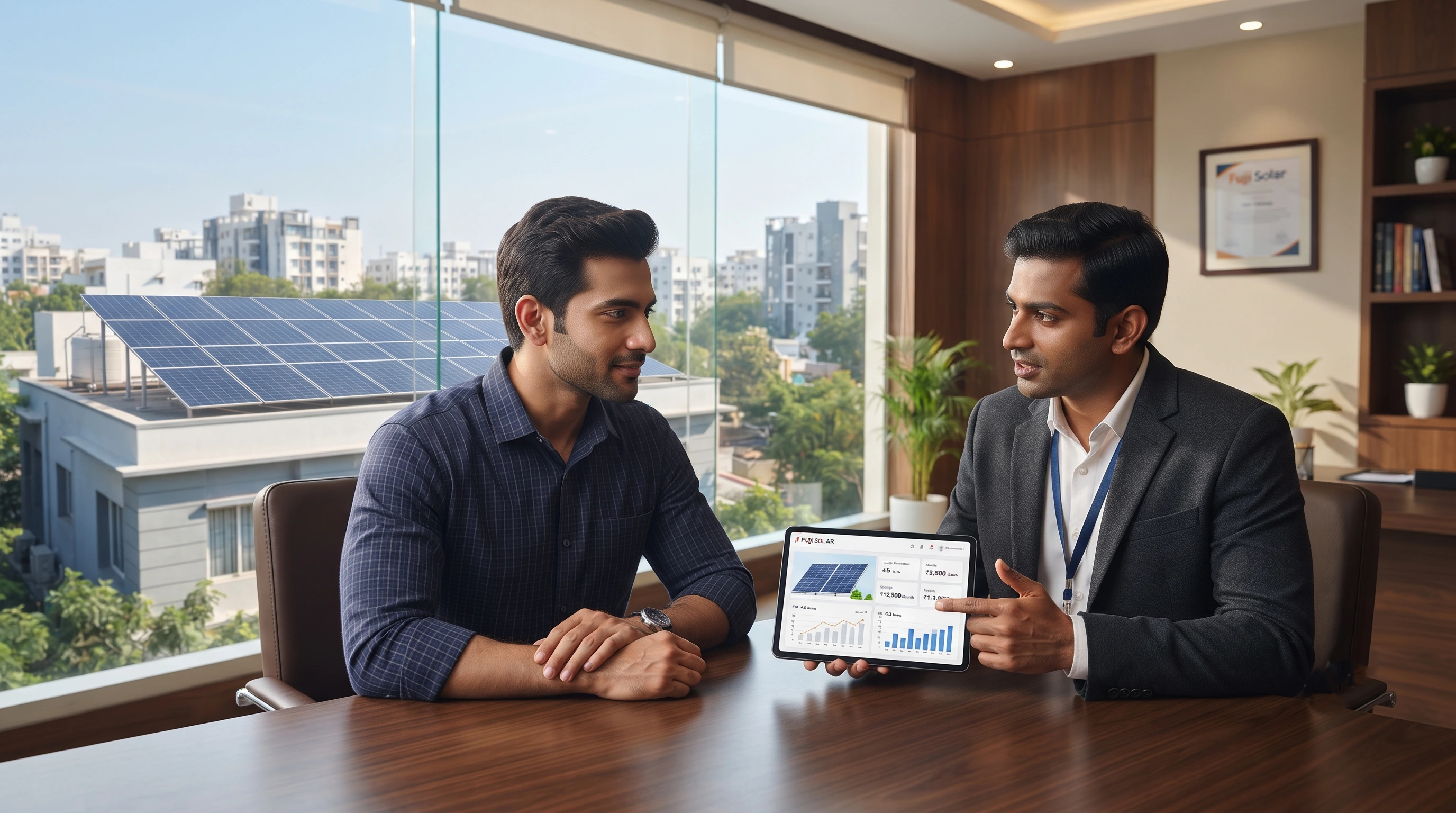
Is Solar Power Worth It for Small Businesses in Tamil Nadu?
Electricity bills can take a significant share of a small business's monthly expenses. Discover how rooftop solar can help shops, offices, bakeries and small industries in Tamil Nadu manage electricity costs and make a long-term investment.
Running a business involves more than managing sales and customers. Rent, salaries, inventory, maintenance and electricity bills all affect your monthly expenses. For businesses that depend on lighting, computers, air conditioning, refrigeration or machinery, electricity can become a significant operating cost.
This is why more business owners are exploring solar power as a long-term way to manage their electricity expenses. From retail shops and bakeries to offices, supermarkets and manufacturing units, commercial rooftop solar can help businesses generate electricity using the roof space they already have.
But is solar power actually worth the investment for a small business in Tamil Nadu? The answer depends on how much electricity you use, when your business operates, the cost of installation and the rules that apply to your electricity connection.
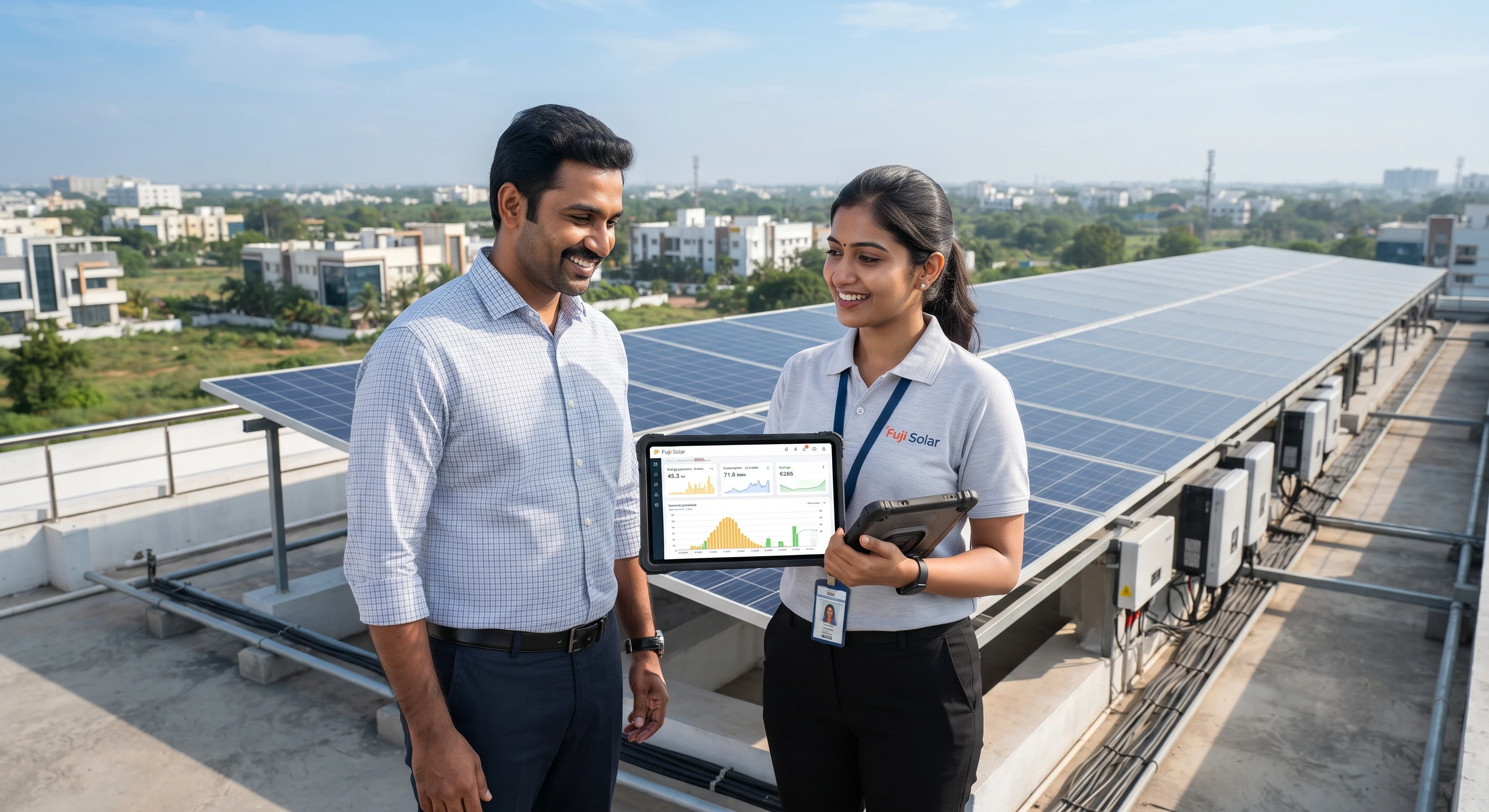
Why Are Small Businesses in Tamil Nadu Considering Solar Power?
Many businesses consume electricity throughout their working hours. Shops need lighting and cooling, offices operate computers and air conditioners, bakeries use ovens and refrigeration equipment, and workshops depend on electrical machinery.
When a business uses a suitable rooftop solar system, it can generate electricity during daylight hours and use that power to operate eligible electrical equipment. This reduces the amount of electricity it needs to purchase from the grid while the solar system is generating power.
Unlike a business expense that repeats without creating a physical asset, a properly designed solar installation can continue generating electricity for many years. That makes it worth evaluating as a long-term investment rather than simply another monthly expense.
Which Types of Small Businesses Can Benefit From Solar?
Solar power is not limited to factories or large commercial buildings. Many small and medium-sized businesses have rooftops that could accommodate a solar installation, provided the roof, electrical connection and electricity consumption are suitable.
- Retail shops and supermarkets that use lighting, fans, air conditioning and refrigeration.
- Bakeries and food businesses that operate refrigerators, freezers and other electrical equipment.
- Offices and IT companies that run computers, networking equipment and cooling systems.
- Textile shops and small garment units that use lighting and electrical machinery.
- Educational institutions and training centres with daytime electricity consumption.
- Hotels, restaurants and commercial kitchens with substantial electrical loads.
- Workshops and small manufacturing units that operate machinery during daylight hours.
- Warehouses and commercial buildings with suitable rooftop space.
However, not every business will achieve the same savings. A shop that uses most of its electricity during the day may benefit differently from a restaurant that operates mainly at night. The best approach is to evaluate the actual electricity consumption before deciding on a system.
How Does Commercial Rooftop Solar Reduce Electricity Bills?
A commercial rooftop solar system converts sunlight into electricity through photovoltaic panels. An inverter then converts the generated electricity into usable alternating current for compatible electrical equipment.
When your business consumes electricity while the panels are generating power, the solar energy can supply part of that demand. The remaining electricity can be drawn from the grid whenever solar generation is insufficient.
For example, imagine an office that operates from 9 AM to 6 PM. Computers, lighting and air conditioning may consume a substantial amount of electricity during these hours. A correctly sized rooftop solar system can supply part of that daytime demand, reducing grid electricity consumption.
Any surplus electricity may be handled through the applicable grid-connected arrangement. The value of exported electricity, settlement rules and any network charges depend on the consumer category and the regulations applicable to the installation.
How Much Can a Small Business Save With Solar Panels?
The savings from commercial solar depend on several factors, including the size of the system, electricity consumption, applicable tariff, solar generation, self-consumption and installation cost. This means there is no single savings figure that applies to every business.
The following example illustrates how to estimate potential savings. These figures are hypothetical and are provided only to explain the calculation. They are not a solar quotation or a guaranteed savings estimate.
| Business Electricity Details | Illustrative Example |
|---|---|
| Average monthly electricity bill | ₹25,000 |
| Annual electricity bill before solar | ₹3,00,000 |
| Illustrative reduction in annual electricity charges | 30% |
| Illustrative annual savings | ₹90,000 |
| Illustrative monthly equivalent | ₹7,500 |
In this example, a business with an annual electricity bill of ₹3 lakh could save ₹90,000 per year if its solar installation reduced the relevant electricity charges by 30%.
Actual savings may be lower or higher. The calculation above assumes a 30% reduction solely for illustration; it is not a prediction for a particular system. A proper assessment should account for solar generation, daytime consumption, electricity tariffs, fixed and demand charges, applicable grid charges, and the treatment of surplus energy.
What Is the Cost of Installing Solar Panels for a Small Business?
The cost of a commercial solar installation depends on system capacity, panel and inverter specifications, mounting structures, roof conditions, electrical work, safety equipment and grid connection requirements.
A small shop may need a relatively modest system, while a bakery, office or manufacturing unit with higher electricity consumption may require a larger installation. Therefore, the first step is to understand the business's electricity demand and identify how much rooftop space is available.
Businesses should also compare the complete installation quotation rather than looking only at the price per solar panel. Inverter capacity, mounting quality, protection devices, installation work, monitoring and warranty coverage all contribute to the overall value of the system.
How Long Does It Take for Commercial Solar to Pay for Itself?
The payback period is the estimated time required for accumulated savings to recover the initial investment. It is one of the most important figures to consider when evaluating commercial solar.
For a simple estimate, divide the initial installation cost by the expected annual net savings. For example, if a system costs ₹4,00,000 and generates ₹1,00,000 in annual net savings, the simple payback period would be approximately four years.
This is only an illustrative calculation. A more complete financial assessment should account for financing costs, maintenance, degradation in solar generation, applicable charges and any changes in electricity tariffs. Tax benefits should be included only after confirming eligibility with a qualified tax professional.
Once the initial investment has been recovered, the system may continue to provide financial benefits for the remainder of its useful operating life. The actual result depends on the system's performance, maintenance and the business's future electricity requirements.
Should Your Business Choose On-Grid, Off-Grid or Hybrid Solar?
Selecting the right solar system is just as important as choosing the installation size. The best option depends on whether your business prioritizes reducing electricity bills, operating independently of the grid or maintaining power during outages.
| Solar System | Main Advantage | Important Consideration |
|---|---|---|
| On-Grid Solar | Generates electricity for daytime business use and can reduce grid consumption. | Standard grid-connected systems generally shut down during grid outages for safety. |
| Off-Grid Solar | Can operate independently of the electricity grid with suitable batteries and system design. | Battery capacity and backup requirements can increase the investment. |
| Hybrid Solar | Combines solar generation with grid power and battery backup where configured. | Costs more than a comparable system without battery storage, depending on configuration. |
For a business that operates mainly during the day and has a reliable grid connection, on-grid solar may be worth evaluating first. A business that needs uninterrupted power for essential equipment may also need to consider a properly designed battery backup solution.
Remember that solar panels alone do not guarantee backup electricity during a power cut. The inverter, battery configuration and backup circuits must be designed to support that requirement.
Can Small Businesses Receive Government Subsidies for Commercial Solar?
Government subsidy eligibility depends on the scheme, consumer category, system type and applicable guidelines. A subsidy announced for residential rooftop solar should not automatically be assumed to apply to a shop, office or industrial electricity connection.
Tamil Nadu's rooftop solar programme includes provisions for different building categories, but the central residential subsidy under PM Surya Ghar is intended for eligible residential consumers. Commercial and industrial businesses should verify the applicable rules before including any subsidy in their financial calculations.
Depending on the business structure and applicable regulations, financing arrangements or tax treatment may also affect the overall investment. Businesses should verify these details with the relevant authorities and qualified financial professionals before making a decision.
What Should You Check Before Installing Commercial Solar?
Before investing in rooftop solar, review the following points to understand whether the project is suitable for your business.
- Review your recent electricity bills to understand monthly consumption and applicable tariffs.
- Check how much electricity your business uses during daylight hours.
- Assess the available roof space, structural condition and shading.
- Choose a system capacity that matches your electricity requirements.
- Compare panel and inverter specifications across quotations.
- Understand the applicable grid connection, metering and export rules.
- Check warranty coverage, monitoring options and maintenance requirements.
- Request an estimate of annual generation, net savings and simple payback period.
- Verify any claimed subsidy, tax benefit or financing option before relying on it.
- Confirm the total installation cost and all included components in writing.
Is Commercial Solar Worth It for Your Business?
Commercial solar is worth evaluating if your business has substantial daytime electricity consumption, suitable roof space and a long-term plan to operate from the same property.
It may be less attractive if your electricity consumption is mainly at night, your roof receives significant shade, your property needs major structural work or most of your electricity bill comes from charges that solar generation does not reduce.
Businesses should also consider their plans for the next several years. If you expect to move premises or significantly change your electricity requirements soon, those factors should be included in the investment decision.
The most reliable way to decide is to compare the proposed solar system's estimated annual savings with its total installation cost. This gives you a clearer picture of the potential financial benefit than choosing a system based only on its capacity.
How Fuji Solar Can Help Your Business Go Solar
Every business has different electricity requirements. A bakery operating refrigeration equipment, an office running air conditioners and a workshop using machinery will not necessarily need the same solar solution.
At Fuji Solar, we help businesses explore rooftop solar solutions based on their electricity consumption, available roof space and operational requirements.
Our team can help you evaluate suitable system capacity, understand the installation process and compare the potential savings against your current electricity expenses. We can also explain the differences between on-grid, off-grid and hybrid systems so that you can make a more informed decision.
If you are considering solar for your shop, office, bakery, commercial building or industrial unit in Tamil Nadu, start by reviewing your recent electricity bills and arranging a site assessment.
Frequently Asked Questions About Commercial Solar in Tamil Nadu
Frequently Asked Questions (FAQ)
1. Is solar power worth it for small businesses in Tamil Nadu?
Solar power can be worthwhile for businesses with substantial daytime electricity consumption, suitable roof space and a favourable installation cost. The actual benefit depends on electricity tariffs, solar generation, self-consumption, grid charges and system maintenance.
2. How much can a small business save with solar panels?
Savings depend on system capacity, electricity consumption, applicable tariffs and how much solar electricity the business uses directly. A site-specific assessment and electricity bill analysis are needed to estimate realistic savings.
3. How much does a commercial solar system cost in Tamil Nadu?
Commercial solar costs vary according to system capacity, panels, inverter, mounting structures, roof conditions, electrical work and grid connection requirements. Businesses should obtain a quotation based on their actual electricity demand and site conditions.
4. How long does commercial solar take to pay for itself?
The payback period depends on the installation cost and annual net savings. For example, a ₹4 lakh system producing ₹1 lakh in annual net savings has a simple illustrative payback period of four years. Actual results will vary.
5. Can a shop or office use solar panels during a power cut?
A standard on-grid solar system generally shuts down when the electricity grid fails. Backup power requires a suitable hybrid or off-grid configuration with the necessary battery and inverter arrangements.
6. Can businesses receive the PM Surya Ghar solar subsidy?
The PM Surya Ghar central subsidy is intended for eligible residential consumers. Businesses should not assume that a commercial or industrial electricity connection qualifies for the same benefit. Check the latest official scheme rules for your consumer category.
7. Do solar panels work during cloudy weather?
Solar panels can generate electricity during cloudy weather, although output is generally lower than under strong sunlight. The system may draw additional electricity from the grid whenever solar generation is insufficient.
8. What is the best solar system for a small business?
An on-grid system may suit a business that primarily wants to reduce daytime electricity expenses and has a reliable grid connection. Businesses requiring backup during outages should evaluate a hybrid or off-grid solution based on their critical loads.
9. How can I find out whether my business is suitable for solar?
Review your recent electricity bills, daytime consumption, available roof space and electricity connection details. A solar site assessment can then help determine a suitable system capacity and estimate the potential financial return.
Final Thoughts
Electricity is an essential part of running a business, but managing its cost can make a difference to long-term profitability. Commercial rooftop solar offers businesses in Tamil Nadu an opportunity to generate their own electricity and reduce their dependence on grid-supplied power during suitable operating hours.
The key is to choose a system based on your actual electricity requirements rather than simply selecting the largest installation or expecting a fixed percentage of savings. Understanding the installation cost, applicable charges and realistic payback period will help you make a better investment decision.
Thinking about solar for your business? Contact Fuji Solar to explore a suitable rooftop solar solution for your electricity needs and take the first step towards more predictable energy costs.