
Solar Panel Warranty Explained: Product Warranty vs Performance Warranty
Buying solar panels is a long-term investment. Learn the difference between product and performance warranties, what solar warranties cover, what they may exclude and what homeowners should check before installation.
When homeowners compare solar panels, they often look at efficiency, price and power output first. But there is another important detail that should not be overlooked: the solar panel warranty. Since a rooftop solar system is designed to operate for many years, understanding the warranty can help you make a more informed purchasing decision.
Solar panels can have more than one type of warranty, and these warranties do not necessarily cover the same things. The two terms homeowners will commonly come across are product warrantyand performance warranty.
In this guide, we will explain the difference between them, how solar panel degradation relates to performance warranties, what you should check before purchasing a system and why the warranty of your inverter and other components also matters.
What Is a Solar Panel Warranty?
A solar panel warranty is a manufacturer's commitment covering specified defects, materials, workmanship or performance conditions for a defined period. The exact terms depend on the manufacturer and the particular solar panel model.
It is important to remember that a warranty is not simply a promise that the panel will produce the same amount of electricity forever. Different parts of the warranty address different aspects of the product.
Product Warranty vs Performance Warranty
The easiest way to understand solar warranties is to separate them into two categories: the product warranty, which generally relates to the physical product, and the performance warranty, which relates to the panel's ability to maintain a specified level of power output over time.
| Warranty Type | What It Generally Covers | What Homeowners Should Check |
|---|---|---|
| Product Warranty | Specified defects in materials or workmanship | Coverage period, exclusions and claim conditions |
| Performance Warranty | Specified minimum power output over time | Guaranteed output level, degradation terms and measurement conditions |
| Inverter Warranty | Specified defects or failures in the inverter | Warranty period, service process and replacement conditions |
| Installation Warranty | Workmanship-related installation issues where provided | What installation work is covered and for how long |
What Is a Product Warranty?
A solar panel product warranty generally protects against specified manufacturing defects and issues related to the materials or workmanship of the panel.
For example, if a panel develops a covered manufacturing defect during the applicable warranty period, the manufacturer may provide a repair, replacement or another remedy according to its warranty terms.
However, the exact coverage depends on the manufacturer's warranty document. Damage caused by improper handling, unauthorised modifications, incorrect installation or external events may be treated differently from a manufacturing defect.
What Is a Performance Warranty?
A solar panel performance warranty relates to the panel's electrical output over time. Solar modules naturally experience some reduction in power output as they age. This process is commonly referred to as degradation.
A performance warranty specifies how the manufacturer's guaranteed power output changes over the stated warranty period. The exact degradation rate and guaranteed output depend on the specific panel model.
This means two panels can have similar power ratings when new but different long-term performance warranty terms. Looking at the performance warranty can therefore be useful when comparing solar panels for home.
What Does Solar Panel Degradation Mean?
Solar panel degradation refers to the gradual reduction in the electrical output of a module over its operating life. It does not mean that a panel suddenly stops working after a particular number of years.
Instead, manufacturers specify expected or warranted performance levels over time. The actual performance of a solar installation can also be influenced by environmental conditions, installation quality, operating temperature, shading, maintenance and other factors.
Why Performance Warranty Matters
A rooftop solar system is a long-term investment. The panels installed on your roof today are expected to continue generating electricity for many years.
The performance warranty gives homeowners a way to understand the manufacturer's stated long-term output commitment. When comparing panels, do not look only at the initial wattage. Consider how the manufacturer defines its guaranteed performance over time.
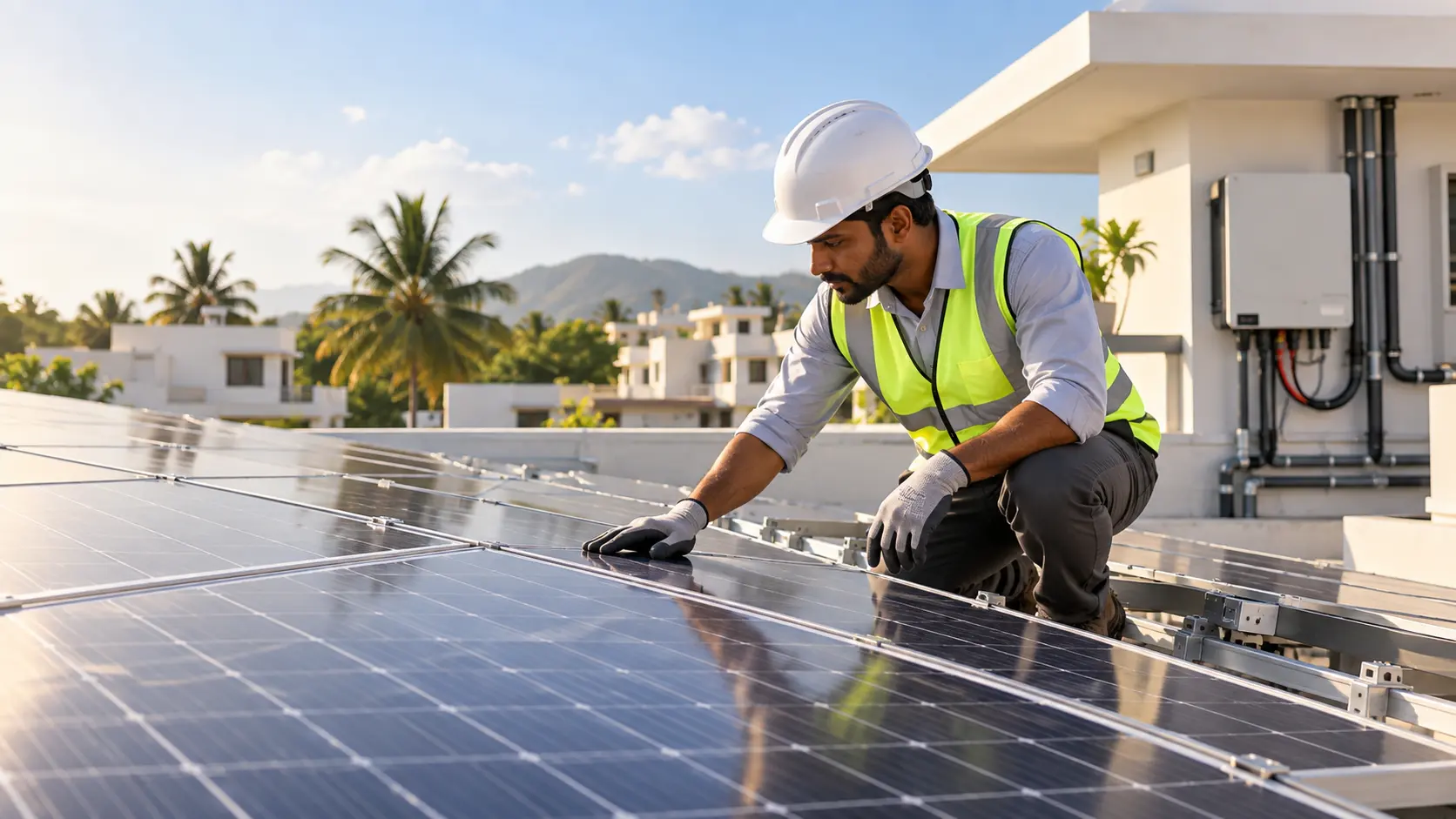
Is a Solar Panel Warranty the Same as an Installation Warranty?
No. A manufacturer's panel warranty and an installer's workmanship warranty can cover different things.
The panel manufacturer generally provides the product and performance terms for the module itself. An installer may separately provide coverage for installation workmanship, depending on the company and agreement.
This is why homeowners should ask for both the manufacturer's warranty documentation and the installer's applicable service or workmanship terms before finalising a residential solar installation.
What About the Solar Inverter Warranty?
Solar panels are only one part of a complete solar power system. The inverter is another important component and has its own warranty conditions.
The inverter converts the electricity generated by the solar panels into a form that can be used by your home's electrical system. Since it performs an important role, homeowners should check its warranty, service availability and replacement process when selecting a solar system.
A good comparison should therefore look at the complete system rather than focusing only on the solar panel warranty.
What Should You Check in a Solar Panel Warranty?
Before purchasing solar panels, do not rely only on a salesperson's verbal explanation. Ask to see the actual warranty documentation and review the conditions that apply to your installation.
- Product warranty period
- Performance warranty period
- Guaranteed power output over time
- Degradation terms
- Warranty exclusions
- Conditions that can invalidate the warranty
- Warranty claim procedure
- Who handles the warranty claim
- Replacement or repair terms
- Availability of manufacturer or authorised service support
What May Not Be Covered by a Solar Panel Warranty?
A warranty does not necessarily cover every type of damage or performance problem. Coverage depends on the manufacturer's specific terms and conditions.
- Damage caused by improper installation
- Unauthorised modifications or repairs
- Improper handling or transportation
- Damage caused by external events where excluded by the warranty
- Normal ageing or degradation outside the guaranteed limits
- Failure to follow applicable installation or operating requirements
- Damage resulting from conditions specifically excluded by the manufacturer
These are examples of areas that may be excluded depending on the manufacturer's terms. Always read the actual warranty document for the specific solar panel model rather than assuming that every issue is covered.
Does Proper Installation Affect Your Warranty?
Installation quality can be important for both the performance and long-term condition of your solar system. Panels need to be mounted correctly, electrical connections need to be handled safely and the system should be installed according to applicable requirements.
Before choosing a solar installation company, ask how the company handles installation quality, documentation, commissioning and warranty support.
How Can You Protect Your Solar Investment?
A warranty is only one part of protecting a solar investment. Proper system design, professional installation, regular monitoring and suitable maintenance can also help your system operate effectively over its working life.
- Choose a properly sized solar system.
- Use compatible and suitable system components.
- Have the system installed by qualified professionals.
- Keep warranty documents and purchase records safely.
- Monitor your solar generation regularly.
- Follow the manufacturer's maintenance recommendations.
- Contact the appropriate service provider when a serious issue occurs.
What Happens If a Solar Panel Has a Warranty Issue?
If you notice an unusual drop in generation or a visible issue with a solar panel, do not immediately assume that the panel itself has failed.
Solar output can change because of shading, dirt, weather, inverter issues, electrical faults and other factors. A professional inspection can help identify the actual cause before a warranty claim is made.
If the issue is determined to be covered under the applicable warranty, the claim should then be handled according to the manufacturer's prescribed procedure.
Solar Panel Warranty Comparison Checklist
| What to Compare | Why It Matters |
|---|---|
| Product warranty | Helps you understand protection against specified product defects. |
| Performance warranty | Shows the manufacturer's stated long-term power output commitment. |
| Degradation terms | Helps you understand how guaranteed output changes over time. |
| Inverter warranty | Provides information about coverage for another critical system component. |
| Installation support | Clarifies who is responsible for installation-related issues. |
| Warranty claim process | Helps you understand where and how to request warranty service. |
How Fuji Solar Helps With Your Solar Investment
Choosing solar equipment involves more than comparing panel wattage or installation cost. At Fuji Solar, we help homeowners understand the important components of their solar system, including panels, inverters, installation requirements and applicable warranty information.
Our team can help you understand the specifications and warranty documentation associated with the equipment selected for your installation. We also provide guidance throughout the installation process and support homeowners with applicable system-related requirements.
The goal is to make sure you understand what you are purchasing and have the right information available throughout the life of your rooftop solar system.
Frequently Asked Questions (FAQ)
1. What is the difference between a product warranty and a performance warranty?
A product warranty generally covers specified defects in materials or workmanship, while a performance warranty relates to the manufacturer's stated minimum power output over time. They address different aspects of a solar panel.
2. What is solar panel degradation?
Solar panel degradation is the gradual reduction in a module's electrical output as it ages. A performance warranty specifies the manufacturer's stated output commitment over the applicable warranty period.
3. Does a solar panel warranty cover installation problems?
Not necessarily. Manufacturer warranties and installation workmanship warranties are separate forms of coverage. The applicable terms should be checked with both the panel manufacturer and the installer.
4. Does the solar inverter have a separate warranty?
Yes. Solar inverters generally have their own warranty terms, which can differ from the warranty provided for the solar panels. Homeowners should review the inverter warranty before purchasing a system.
5. What should I do if my solar panel stops producing normally?
First, have the system checked to identify the cause. Reduced generation can result from shading, dirt, weather, inverter problems or other issues. If a covered product issue is identified, the applicable warranty claim process can then be followed.
Conclusion
Understanding the solar panel warranty is an important part of choosing a rooftop solar system. Product warranties and performance warranties serve different purposes, while inverters and installation work may have separate warranty conditions.
Instead of looking only at the length of a warranty, take time to understand what it covers, what it excludes, how performance is measured and how a warranty claim is handled. This gives you a much clearer picture of the long-term protection associated with your solar investment.
If you are planning a solar installation in Tamil Nadu, Fuji Solar can help you understand your system requirements, equipment specifications and applicable warranty information before you make your investment.