Net Metering in Tamil Nadu: How Rooftop Solar Can Reduce Your Electricity Bill
Thinking about rooftop solar in Tamil Nadu? Learn how grid-connected solar works, how electricity generated by your panels is used, how excess power is handled, and what homeowners should know about the metering process.
For many homeowners, the biggest reason to consider rooftop solar is simple: reducing dependence on electricity purchased from the grid. But installing solar panels is only one part of the process. If your system is connected to the electricity grid, understanding how solar metering in Tamil Nadu works is equally important.
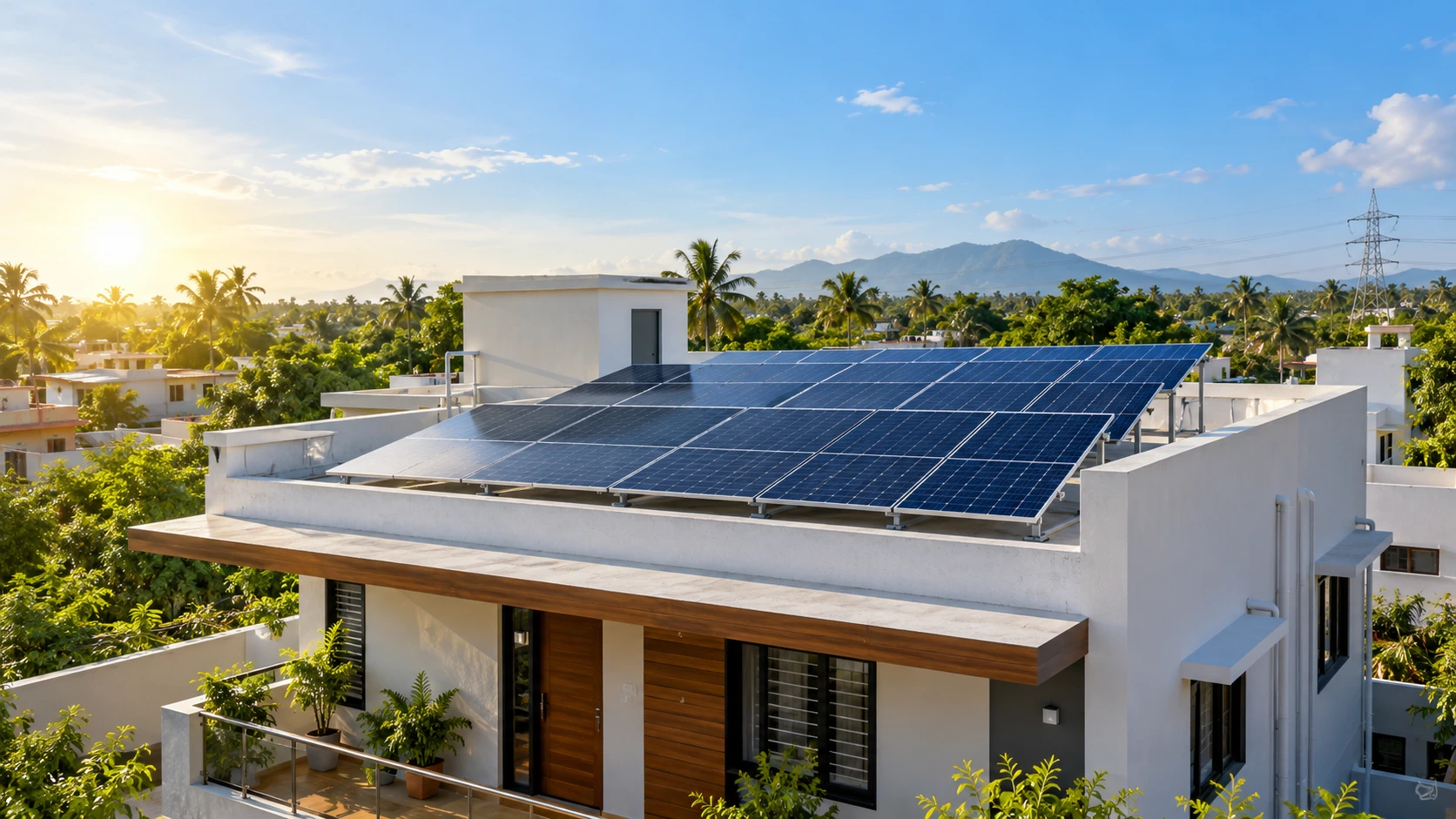
A grid-connected rooftop solar system allows the electricity generated by your panels to be used by your home. When your solar system produces more electricity than your appliances are consuming, the excess generation can flow into the grid through the appropriate metering arrangement.
Tamil Nadu's official rooftop solar portal provides online processes for rooftop PV applications and for installing a net meter to measure energy exported to the grid.
What Is Net Metering?
Net metering is a billing arrangement associated with grid-connected rooftop solar. In simple terms, the electricity meter records energy flowing between your home and the electricity grid.
During the daytime, your solar panels generate electricity. Your home uses the electricity it needs first. Depending on your generation and consumption at that moment, electricity may also flow from your home to the grid.
When your solar generation is not enough to meet your household demand, such as during periods of low sunlight or at night, your home can draw electricity from the grid.
How Does a Grid-Connected Solar System Work?
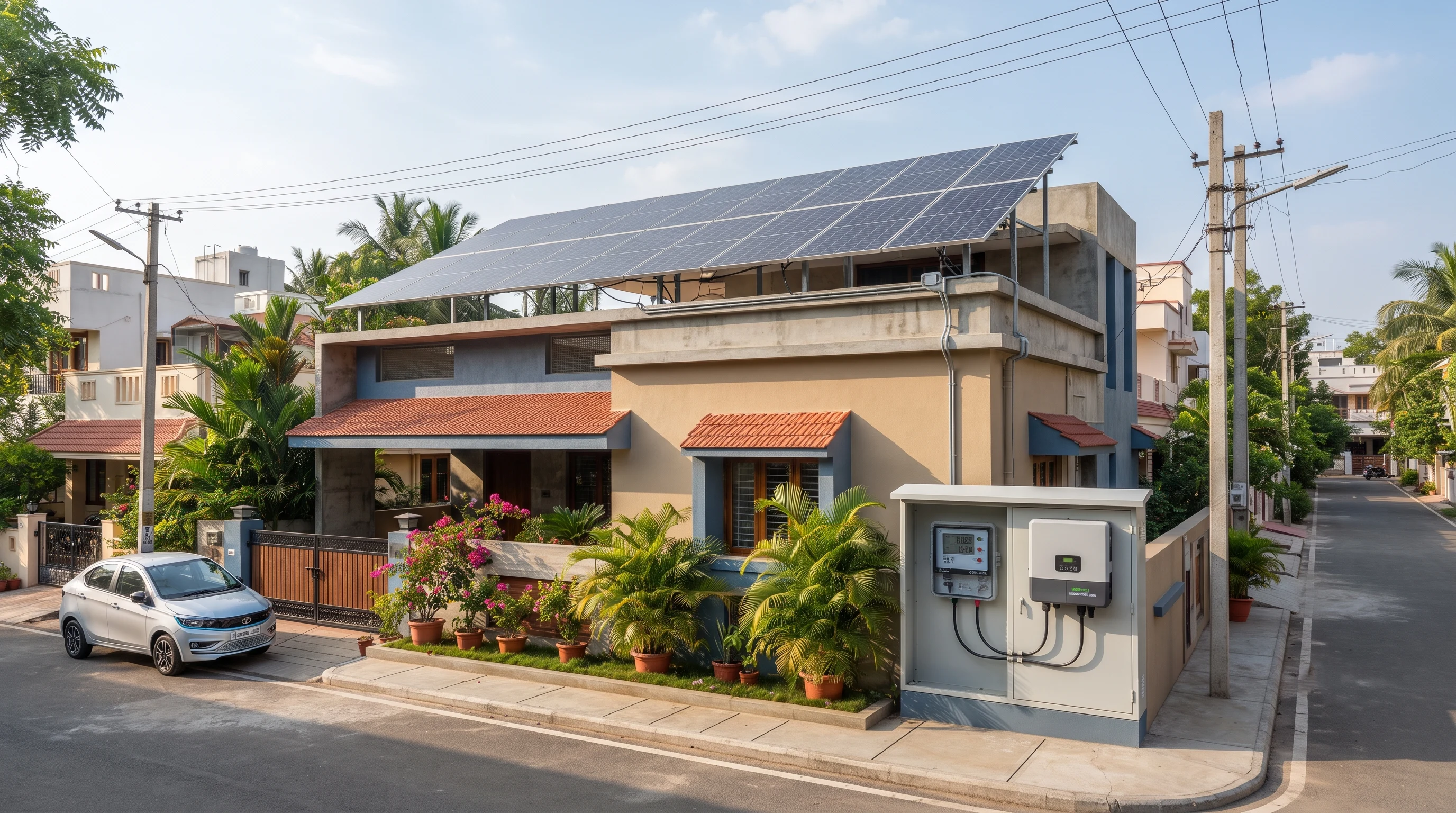
A typical rooftop solar system consists of solar PV modules, an inverter, mounting structures, cables, protection equipment and the required metering arrangement.
- Solar panels convert sunlight into DC electricity.
- The inverter converts the generated DC electricity into AC electricity used by household appliances.
- Your home's electrical loads consume available solar power.
- When solar generation exceeds immediate consumption, surplus electricity can flow toward the grid under the applicable metering arrangement.
- When solar generation is insufficient, electricity can be drawn from the grid.
- The applicable meter records the relevant import and export energy.
TNPDCL's rooftop solar FAQ explains that grid-connected rooftop systems can supply captive loads and feed excess generation to the grid when the grid is available. When solar generation is insufficient, the balance can be supplied from the grid.
What Happens to Excess Solar Electricity?
Imagine your solar panels are generating more electricity than your home is using at a particular moment. Instead of allowing that generation to go unused, the surplus can be exported to the grid according to the applicable metering and billing arrangement.
The exact financial treatment of exported electricity depends on the applicable scheme and registration date. This distinction is important because Tamil Nadu's official FAQ explains that applications registered before March 25, 2019 were covered by the earlier net-metering arrangement, while applications registered on or after that date follow the net-feed-in methodology described by the utility.
Net Metering vs Net Feed-In in Tamil Nadu
These terms are sometimes used interchangeably in online discussions, but they are not necessarily the same billing mechanism.
According to the official TNPDCL information, older applications registered before March 25, 2019 were handled under the solar net-metering arrangement. For applications registered on or after that date, the utility describes a net feed-inmethodology in which the monetary value of exported electricity is credited and the value of imported electricity is calculated at the applicable retail tariff.
| Aspect | What It Means |
|---|---|
| Solar generation | Your rooftop panels generate electricity during available sunlight. |
| Self-consumption | Your home can use the solar electricity being generated. |
| Export | Surplus electricity can flow to the grid under the applicable arrangement. |
| Import | Your home can draw electricity from the grid when solar generation is insufficient. |
| Billing | The applicable billing method determines how imported and exported electricity are accounted for. |
How Can Rooftop Solar Reduce Your Electricity Bill?
One of the biggest advantages of a grid-connected solar system is that you can use electricity generated directly on your property. Every unit of solar electricity consumed by your home can reduce the amount of electricity you need to purchase from the grid at that moment.
For example, your solar panels may be producing electricity during the afternoon while your refrigerator, fans, computers, pumps or air conditioners are operating. Using available solar generation for these loads can reduce your reliance on grid electricity.
The actual reduction in your electricity bill depends on your consumption pattern, solar system size, generation, tariff structure, applicable metering arrangement and other factors. Therefore, solar should not be presented as a fixed bill amount or guaranteed monthly saving.
What Happens at Night?
Standard grid-connected rooftop solar panels do not generate electricity at night. When your panels are not producing electricity, your home can draw power from the electricity grid.
The same principle applies during periods when solar generation is lower than your household demand. TNPDCL's FAQ states that when rooftop solar generation is insufficient, the balance power is drawn from the grid.
Do You Need a Special Meter for Rooftop Solar?
Grid-connected rooftop solar requires an appropriate metering and connectivity process. TNPDCL's rooftop solar portal specifically provides for installation of a net meter to facilitate measurement of energy exported to the grid.
The utility's FAQ also describes the process following installation: the vendor or consumer submits the required readiness information, inspections are carried out according to the applicable installation capacity, and a bi-directional meter is installed for grid connectivity after the required inspection process.
How to Apply for Rooftop Solar in Tamil Nadu
If you are planning a rooftop solar installation in Tamil Nadu, the process starts with submitting the required application through the applicable official channel. The installation then needs to follow the technical and connectivity requirements before the system can be connected to the grid.
- Check your electricity connection and rooftop suitability.
- Submit the required rooftop solar application through the applicable portal.
- Select a suitable solar system and installation provider.
- Complete the rooftop solar installation according to the applicable technical requirements.
- Submit the required installation and readiness information.
- Complete the inspection and metering process required for grid connectivity.
- Begin operating the grid-connected solar system after the required approvals and connection procedures are completed.
What Can Affect Your Solar Bill Savings?
Installing solar does not mean that every homeowner will receive the same reduction in their electricity bill. Your actual savings depend on several factors, including how much electricity your system generates and how much of that electricity your home consumes.
- Size and capacity of your solar system
- Monthly household electricity consumption
- Amount of sunlight available at the property
- Roof direction, tilt and shading
- Daytime versus nighttime electricity usage
- Applicable electricity tariff and billing arrangement
- System efficiency and maintenance
- Applicable utility rules and metering arrangements
A household that consumes a large portion of its electricity during daylight hours may be able to use more of its solar generation directly. Another household may rely more heavily on grid electricity outside solar-generation hours. Understanding your consumption pattern is therefore important when designing a solar system for home.
On-Grid Solar vs Solar With Battery Storage
A standard on-grid solar system works together with the electricity grid. It does not normally provide backup power during a grid outage because grid-connected inverters are designed to disconnect when the grid is unavailable.
If backup power is important for your home, a battery-based or hybrid solar solution may be worth considering. These systems can store electricity for later use, depending on their design and available battery capacity.
Is Rooftop Solar Worth Considering in Tamil Nadu?
Tamil Nadu receives substantial sunlight across much of the year, making rooftop solar an option worth considering for many residential properties. However, the suitability of a solar system depends on the individual property rather than sunlight alone.
Available roof area, structural condition, shading, electricity consumption and the applicable grid-connection requirements should all be evaluated before installation.
Common Mistakes to Avoid
Many homeowners focus only on the number of panels or the initial installation cost. A better approach is to look at the complete system and understand how it will work with your electricity usage.
- Choosing a system size without checking your electricity consumption
- Ignoring shading from trees or nearby buildings
- Assuming solar generation will be identical every day
- Not understanding the applicable metering and billing arrangement
- Choosing equipment without checking specifications and warranties
- Ignoring maintenance and system monitoring
- Not confirming the current utility requirements before installation
How Fuji Solar Can Help
Planning a rooftop solar system involves several steps, from understanding your electricity consumption to selecting the right system and completing the required grid-connection process. Having professional guidance can make the process easier to understand.
Fuji Solar helps homeowners plan and install residential solar systems while providing guidance throughout the applicable application and metering procedures. Our team can help you understand your solar requirements, evaluate your property and navigate the steps involved in connecting your system to the grid.
From selecting a suitable rooftop solar system to completing the installation process, Fuji Solar aims to provide support throughout the project rather than leaving homeowners to manage each stage on their own.
Frequently Asked Questions
Frequently Asked Questions (FAQ)
1. What is net metering in Tamil Nadu?
Net metering is a grid-connected solar metering arrangement. However, the applicable billing mechanism in Tamil Nadu depends on the relevant rules and the date and type of application. Current applicants should check the latest TNPDCL requirements rather than assuming that older net-metering rules apply.
2. Can rooftop solar reduce my electricity bill?
Yes, rooftop solar can reduce the amount of electricity a household needs to purchase from the grid. The actual reduction depends on system size, solar generation, household consumption, tariff structure and the applicable metering arrangement.
3. Does solar work at night?
Solar panels do not normally generate electricity at night. A grid-connected home can draw electricity from the grid when solar generation is unavailable. A battery system can provide stored energy when appropriately designed.
4. Do I need a special meter for rooftop solar?
Grid-connected rooftop solar requires the applicable metering and connectivity arrangements. TNPDCL provides a process for rooftop solar applications and meter installation as part of grid connectivity.
5. Does Fuji Solar help with the solar application process?
Yes. Fuji Solar provides guidance and support through the applicable rooftop solar application and metering process, helping homeowners understand the required steps and information.
Conclusion
Understanding net metering in Tamil Nadu is an important part of planning a grid-connected rooftop solar system. Solar panels can help your home generate its own electricity, while the grid continues to provide power when your solar generation is insufficient.
The exact way electricity is measured and credited depends on the applicable utility rules and billing arrangement. That is why homeowners should check the current requirements before installing their system.
If you are considering solar installation in Tamil Nadu, Fuji Solar can help you understand the available options, plan a suitable rooftop system and guide you through the applicable application and metering procedures.