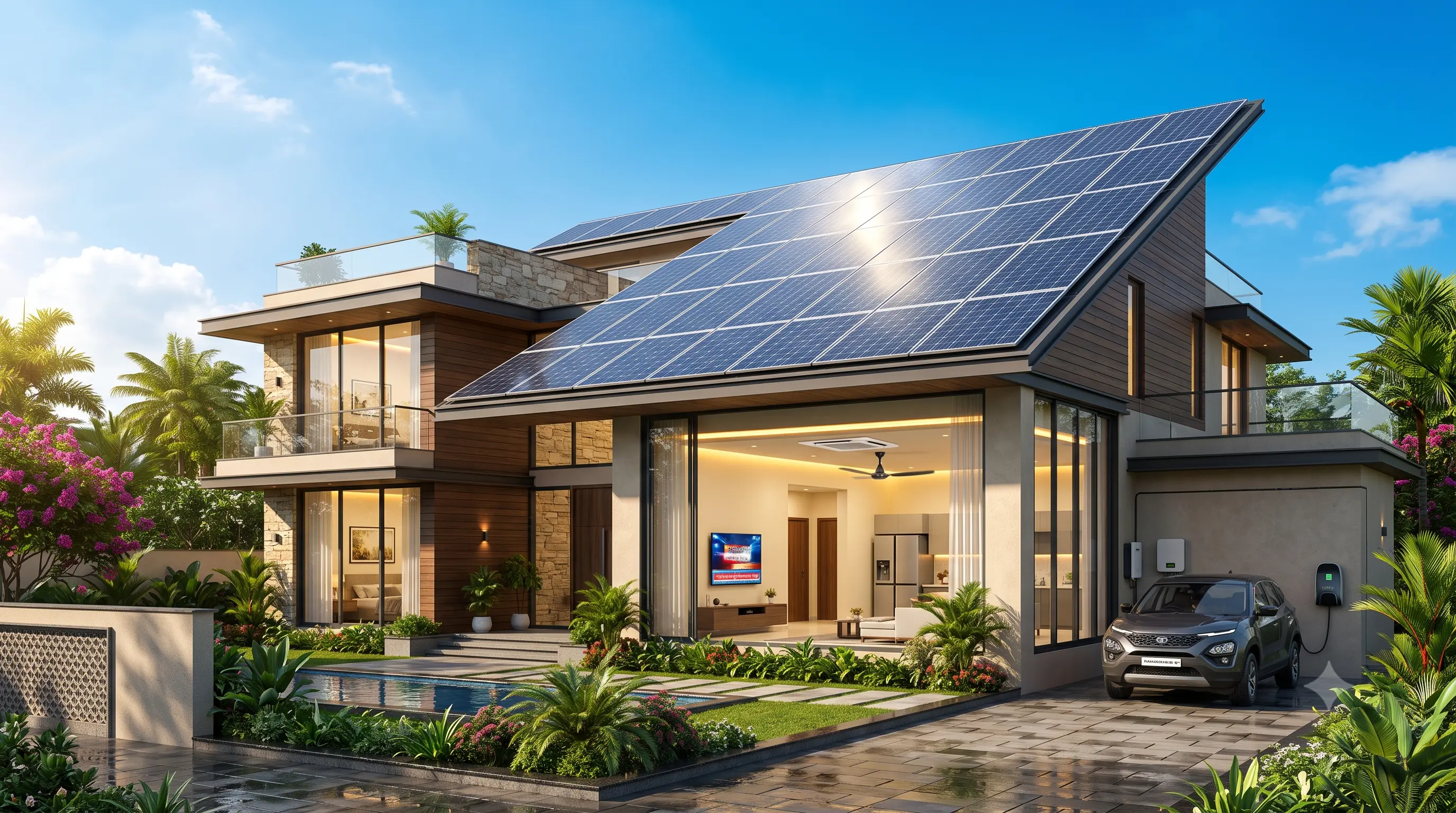
Can Solar Panels Power Your Entire Home? Here's What You Need to Know
Discover whether solar panels can power your entire home, what affects solar generation, how many panels you may need, and how to choose the right solar system for maximum savings.
One of the first questions homeowners ask before investing in solar panels for home is whether they can power the entire house. The answer is yes—but it depends on your home's electricity consumption, the size of your rooftop solar system, available roof space, and the type of solar system you install.
Modern solar power systems for home are capable of generating enough electricity to operate lighting, fans, refrigerators, televisions, washing machines, water pumps, air conditioners, and many other household appliances. Choosing the right system ensures reliable performance and long-term savings.
Can Solar Panels Power an Entire House?
Yes. A properly designed solar system can supply most or even all of your home's daily electricity needs. The right system capacity depends on how much electricity your family consumes each month rather than the size of the house itself.
Homes with higher electricity usage generally require larger systems, while homes with moderate usage can achieve excellent results with smaller rooftop installations.
What Determines How Much Power You Need?
Every household uses electricity differently. Before recommending a solar solution, professionals evaluate your daily energy usage and future requirements to ensure the system delivers the expected performance.
- Monthly electricity consumption
- Number of family members
- Air conditioner usage
- Water pumps and heavy appliances
- Future expansion plans
- Available rooftop space
How Many Solar Panels Are Needed?
There is no one-size-fits-all answer. The number of solar panels depends on panel efficiency, available sunlight, electricity usage, and roof space. Instead of counting panels, it is more practical to choose the right system capacity based on your home's energy requirements.
| Home Type | Recommended System | Suitable For |
|---|---|---|
| Small Home | 3kW | Essential household appliances |
| Medium Home | 5kW | Families with higher electricity usage |
| Large Home | 10kW or Above | Large homes and villas with heavy power consumption |
Can Solar Run Air Conditioners and Other Heavy Appliances?
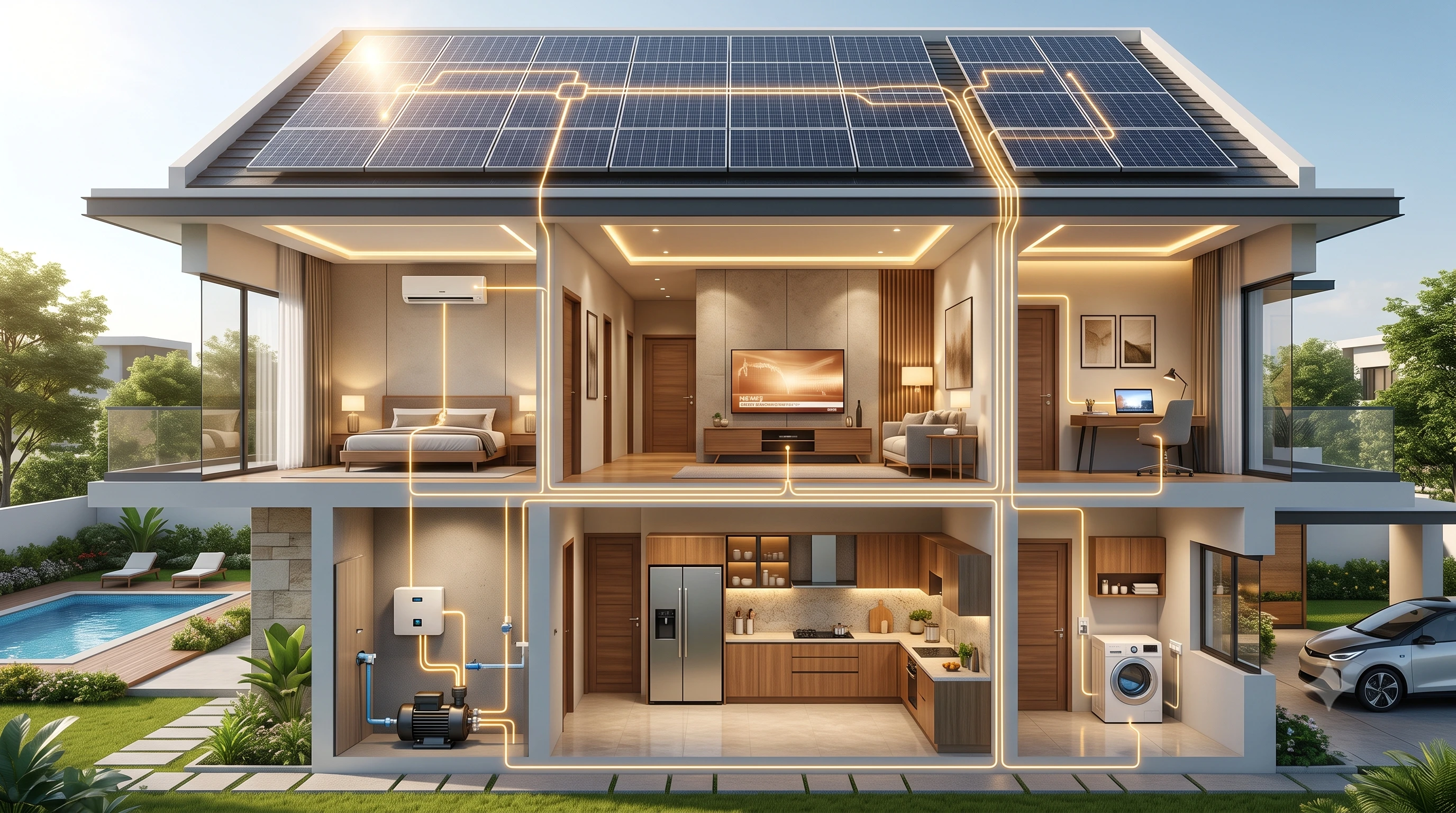
Absolutely. A properly sized solar system can operate air conditioners, refrigerators, washing machines, water heaters, televisions, computers, and other high-energy appliances. The key is selecting a system that matches your daily electricity demand rather than underestimating your future usage.
Many homeowners choose larger systems because they expect their energy consumption to increase over time with additional appliances or electric vehicles.
Do You Need a Solar Battery Backup?
Whether you need a solar battery backup depends on your lifestyle and local power supply. An on-grid solar system is ideal if your area has a stable electricity connection and your main goal is to reduce monthly electricity bills. However, if frequent power cuts affect your daily routine, a hybrid solar system with battery storage ensures uninterrupted power even when the grid is unavailable.
A battery backup stores excess solar energy generated during the day and supplies it whenever sunlight is unavailable or during unexpected outages. This provides greater energy independence and peace of mind, especially for homes that rely on continuous electricity for work, security systems, or essential appliances.
Choosing the Right Solar System for Your Home
The best solar power system for home is not always the biggest one—it is the one that matches your electricity consumption, roof size, and future energy needs. A professional site survey helps determine the ideal system capacity, ensuring you get the best performance and long-term value from your investment.
- Analyse monthly electricity usage
- Measure available rooftop space
- Plan for future appliance additions
- Choose between on-grid or hybrid systems
- Install high-efficiency solar panels
Why Choose Fuji Solar?
Fuji Solar provides complete solar panel installation solutions for homes, apartments, villas, commercial buildings, and industries. Our experts assess your electricity requirements, recommend the right system, and deliver professional installation backed by reliable after-sales support. From consultation to commissioning, every project is designed to maximize energy generation and long-term savings.
Frequently Asked Questions (FAQ)
1. Can solar panels power an entire house?
Yes. A properly designed solar system can generate enough electricity to power most or all of your household appliances, depending on your energy consumption and system size.
2. Can solar panels run air conditioners?
Yes. A correctly sized rooftop solar system can comfortably power air conditioners along with other household appliances.
3. Do I need a battery backup?
If your area experiences frequent power cuts, a hybrid solar system with battery backup provides uninterrupted electricity. Homes with reliable grid power may only require an on-grid system.
4. How do I know which solar system is right for my home?
The ideal solar system depends on your monthly electricity usage, available roof space, and future energy needs. A professional site assessment helps determine the best option.
5. Can I expand my solar system later?
Yes. Many solar systems can be upgraded as your electricity requirements increase, provided the installation is planned correctly.
Conclusion
So, can solar panels power your entire home? In most cases, yes. With the right system design, quality components, and professional installation, a rooftop solar system can supply the majority of your daily electricity needs while significantly reducing your dependence on conventional power sources.
If you're planning to switch to solar, Fuji Solar can help you choose the ideal system based on your energy usage and future requirements. Our team is committed to delivering reliable, efficient, and sustainable solar solutions that help homeowners enjoy cleaner energy and long-term savings.